
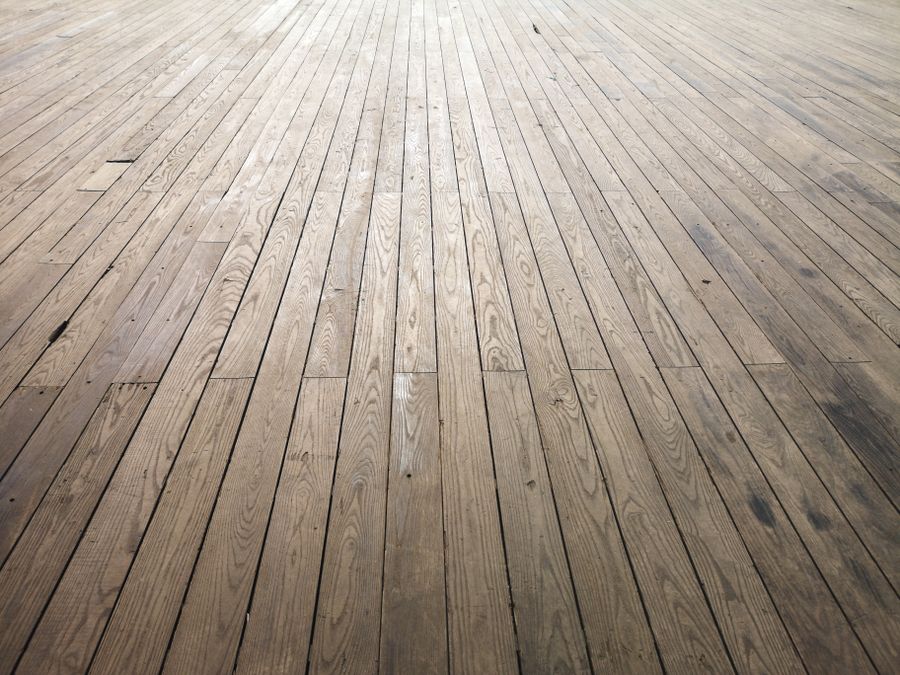
Repair first,
then bring back the beauty
Restoration is more than sanding — it starts with putting the floor structurally right. Here's what a full restoration involves.
Honest assessment
We look at what's actually under the wear and tell you straight whether restoration makes sense — it usually does.
Board repairs & replacement
Loose boards secured, split boards mended, and missing or rotten sections replaced with matching timber.
Gap filling
Draughty gaps filled with resin-and-dust or slivers, so the floor looks whole and feels warmer.
Deep sanding
Old paint, glue, bitumen and blackened finishes stripped back through progressive sanding passes.
Stain & colour matching
Repaired sections and new boards blended in, and the whole floor finished to one consistent tone.
Protective refinishing
Sealed with hard-wearing oil or lacquer so the restored floor is ready for everyday life.
Four steps from
written-off to wonderful
Send photos
Photos of the worst bits help most. We'll give you an honest view on whether it can be saved.
Assessment & quote
A clear quote covering repairs, sanding and finishing — no obligation, no pressure.
Repair & rebuild
Boards fixed, gaps filled and problem areas rebuilt before any finishing work begins.
Sand & refinish
The whole floor sanded and refinished to one consistent, protected surface.

Tired doesn't
mean finished
Under carpet, paint or fifty years of wear there's usually a floor worth keeping. If you're not sure what you've got, send a photo — we'll tell you honestly whether restoring beats replacing.
Rated 5 stars by the people
whose floors we've restored
Real reviews from Dorset homeowners who trusted us with their timber floors.
Our Victorian pine floor looked tired and grey — now it glows. Barely any dust in the house and they left every room spotless.
Honest advice from the first phone call. The quote was clear, the work was on time, and the finish on our oak boards is beautiful.
They repaired a couple of damaged boards you'd never spot now, then sanded and sealed the lot. Genuinely couldn't be happier.